Quick Bites: Legal Rules & Compliance
- The Ministry of Road Transport and Highways (MoRTH) mandates the integration of Aadhaar with transport credentials to eliminate duplicate and fraudulent driving licenses across India.
- Without an Aadhaar-linked profile, processing critical online RTO services via Sarathi becomes heavily restricted, forcing you into manual bureaucratic paperwork.
- Any discrepancy between your Aadhaar demographic data and your existing driving license records will cause instant rejection during the digital eKYC verification phase.
Quick Bites: Financial Hacks
- A fully integrated identity profile drastically accelerates underwriting verifications, securing you the lowest premiums during your next motor insurance renewal.
- Banks utilize Aadhaar-linked Vahan datasets to execute instant background checks, granting you rapid access to premium, lowest EMI vehicle finance options.
- If demographic updates are required before linking, process the UIDAI correction fees online using high-tier credit card offers to harvest valuable cashback rewards.
Quick Bites: Sarathi Processing
- The entire process to link Aadhaar with driving license online is executed via a secure OTP gateway on the central Sarathi Parivahan portal.
- Once linked, your digital credentials automatically sync with your DigiLocker and mParivahan accounts, creating an impenetrable, legally valid digital portfolio.
- State-specific RTO web pages redirect back to the central server, meaning the eKYC synchronization is standard and uniform across all Indian jurisdictions.
The Digital Identity Mandate: Eradicating Transport Fraud
You have meticulously maintained your high-value automotive portfolio, ensuring your luxury vehicles carry premium zero-depreciation covers and flawless registration records. However, a massive shift in India’s central data infrastructure has rendered isolated documents obsolete. If your driving license operates independently of your central biometric identity, you are driving on borrowed time.
To combat the rampant issuance of duplicate licenses and curb interstate transport fraud, the Regional Transport Office (RTO) has fully integrated the Sarathi database with the Unique Identification Authority of India (UIDAI). The directive is clear: your transport credentials must be anchored securely to your unique 12-digit Aadhaar code. Failing to link Aadhaar with your driving license online strips away your ability to utilize contactless RTO services, exposing you to severe administrative delays.
Furthermore, an unlinked profile creates massive friction during digital enforcement audits. When a highway interceptor scans your credentials, a lack of eKYC verification can raise immediate red flags, stalling your journey and complicating standard checks. If your file is additionally burdened with unresolved citations, like a pending pay e-challan online notification, the system can lock your data completely until physical RTO visits are completed.
Protecting your operational mobility requires proactive alignment with central digital mandates. This comprehensive cluster guide breaks down the exact technical workflow to link your Aadhaar card with your driving license securely, the financial benefits of an integrated identity, and the troubleshooting steps required to bypass severe eKYC verification blockages.
The Legal Framework Behind Aadhaar Seeding
The push for Aadhaar seeding in the transport sector is driven by the amended Motor Vehicles Act, which aims to establish a singular, undeniable civil identity for every Indian motorist. Historically, individuals would exploit regulatory loopholes across state borders to acquire multiple driving licenses, utilizing them to evade traffic penalties or mask past suspensions.
By forcing an Aadhaar link, the Sarathi platform executes a centralized deduplication algorithm. The moment you input your biometric identity, the system scans the national grid. If a secondary license exists under your fingerprint or iris scan, the portal flags it immediately, canceling the duplicate document and preserving only your primary credential.
This integration ensures that safety violations and traffic penalties are permanently attached to the correct driver. To understand how automated surveillance networks utilize this unified identity to enforce compounding highway penalties, study our foundational guide on checking your e-challan status traffic fines history regularly.

Step-by-Step Blueprint: How to Link Aadhaar with Driving License Online
To execute the linking process securely and avoid phishing traps, you must interact exclusively with the official MoRTH transport channels. Follow this precise technical sequence to complete your eKYC integration seamlessly:
- Access the Official State Portal: Navigate to the central Sarathi Parivahan dashboard (sarathi.parivahan.gov.in) and select your respective state from the primary dropdown menu.
- Locate the Aadhaar Link Service: On the state-specific dashboard, locate the specific module labeled “Link Aadhaar” or “Aadhaar eKYC for DL.”
- Input Driving Credentials: Enter your unique Driving License Number and your Date of Birth exactly as they appear on the smart card to pull your active file from the server.
- Enter UIDAI Details: Input your 12-digit Aadhaar Number or your 16-digit Virtual ID (VID) into the secure encrypted portal.
- Execute OTP Authentication: Click “Submit.” The UIDAI server will instantly dispatch a One-Time Password (OTP) to the mobile number legally registered with your Aadhaar card.
- Confirm Data Synchronization: Enter the OTP to validate the session. The system will display your demographic data. If the details match perfectly, confirm the binding. You will receive an official SMS confirming the successful link.
Completing this structured integration guarantees that national transport servers upgrade your identity to a verified status, unlocking 100% contactless RTO services instantly.
Resolving Biometric and OTP Verification Failures
A frequent administrative nightmare occurs when the Sarathi server rejects the Aadhaar linking request due to data mismatches. The eKYC protocol is ruthless: if your name spelling, date of birth, or gender recorded on your driving license deviates even slightly from your UIDAI database file, the integration will fail instantly.
If you face a rejection, you must halt the linking process. You cannot force the transport database to accept misaligned records. Instead, you must log into the UIDAI portal and submit a demographic update request to align your Aadhaar data with your official transport documents (or vice versa via an RTO correction application).
Additionally, if your active mobile number has changed and is no longer synced with your Aadhaar card, the mandatory OTP will never arrive. You must visit a localized Aadhaar Seva Kendra to update your mobile string before attempting the RTO digital sync. Mastering these identity updates ensures your foundational documents remain perfectly synced across all financial platforms.

💎 Mizanur’s Corporate Hack: The Digital Update Loop
If you are forced to process demographic corrections on the UIDAI portal or execute address updates via the Vahan interface to align your documents, you will encounter mandatory government processing fees. Never process these micro-transactions via direct net banking. Route the digital fee clearance through gateways that accept high-tier credit card offers. Premium cards classify these government utility portal clears under accelerated reward structures, converting annoying bureaucratic correction fees into direct cashback returns or premium travel miles while securing your digital identity flawlessly.
How Aadhaar Linking Secures Your Motor Insurance Claims
A dangerous financial vulnerability made by many motorists is failing to understand how modern insurance underwriting engines verify claims. Your comprehensive motor policy is a powerful protective asset, but its legal validity depends strictly on your verified identity.
In the event of a catastrophic highway collision, the insurance firm’s claims investigation unit will execute API calls to the Sarathi database. An Aadhaar-linked driving license provides indisputable, biometric-backed proof that you are the exact authorized individual listed on the policy contract. It eliminates any suspicion of identity fraud or driver substitution.
If your license is unlinked or flagged for data mismatches, the insurer possesses absolute legal grounds to delay or reject your multi-lakh own-damage claims entirely, forcing you to liquidate personal savings for luxury vehicle repairs. To analyze exactly how identity verification controls your premium tiers and zero-depreciation cover riders, explore our comprehensive guide on RTO rules for motor insurance in India.

Impact on Vehicle Finance and CIBIL Score Validation
The modern Indian corporate banking sector relies heavily on the structural integrity of central identity databases. When you apply for premium vehicle finance options or negotiate competitive lowest EMI loan rates for a flagship automobile upgrade, the lending institution executes a rapid eKYC background audit.
An Aadhaar-linked transport profile instantly proves your residential stability and legal compliance, heavily bolstering your banking credibility. Lenders view an individual with fully synchronized, government-verified documents as a highly dependable, low-risk borrower. This compliance discipline helps you secure fast-tracked loan approvals and elite financial credit lines.
Conversely, mismatched or unverified credentials can trigger manual banking audits, delaying your luxury car delivery and potentially damaging your credit application scoring. Protecting your digital identity sync is essential to safeguarding your broader credit opportunities.
Streamlining Interstate Relocation and Permit Renewals
For corporate executives who frequently relocate across states or manage global travel agendas, a linked identity profile is a massive operational advantage. Whenever you execute high-level RTO services, such as applying for an interstate vehicle migration or renewing an expired license, the Sarathi portal fast-tracks eKYC-verified accounts.
By bypassing the need to upload repetitive physical proof documents, you can execute a driving license renewal process after expiry seamlessly online. The system simply pulls your updated biometric photograph and current residential address directly from the UIDAI servers, eliminating bureaucratic red tape.
Similarly, securing global transport privileges requires absolute identity verification. A seamlessly linked Aadhaar profile guarantees rapid processing when you need to apply for an international driving permit online before a high-profile corporate trip abroad.
Verifying Your DigiLocker and mParivahan Sync
A frequent administrative error made by motorists is assuming their digital identity is fully secured the exact moment they complete the online linking steps. Synchronization delays between the UIDAI servers, the localized RTO testing servers, and the centralized transport database can occasionally leave records un-synced.
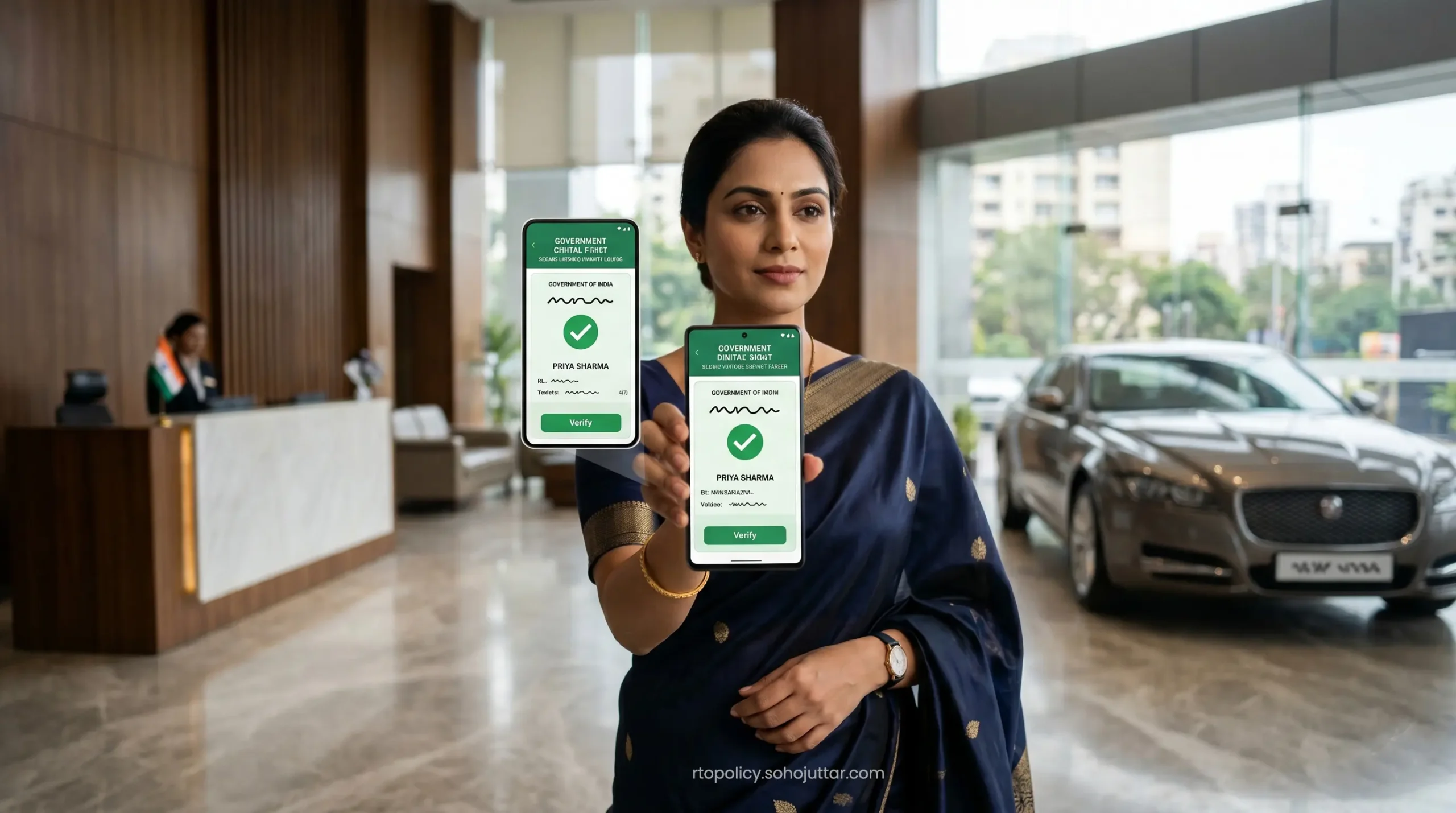
After successfully linking your Aadhaar with your driving license online, you must monitor the mParivahan mobile app and your DigiLocker vault after 72 hours. Refresh your document lists to verify that your digital driving license reflects the updated eKYC status accurately. This final verification check guarantees that automated highway police networks recognize your credentials as fully verified during random roadside audits.
Taking this extra verification step protects your digital transport footprint from system integration bugs, keeping your professional profile perfectly aligned with central transport mandates and shielding your personal capital from unexpected administrative complications. To master the broader architecture of vehicle registration tracking, study our definitive guide on Vahan portal registration and services.
Final Blueprint for Absolute Identity Compliance
Navigating the digitized transport corridors of modern India requires proactive preparation and an intelligent approach to identity management. The integration of Aadhaar with your transport files is not an optional luxury; it is a critical mandate that ensures your automotive freedom and protects your personal wealth asset track from bureaucratic paralysis.
By executing the linkage early, aligning your demographic data flawlessly, and routing any associated administrative fees through high-tier credit card structures, you build an ironclad, indisputable identity shield around your capital portfolio.
Stay highly informed, execute regular audits of your transport credentials via DigiLocker, and treat centralized eKYC compliance as a primary pillar of your personal wealth management strategy to ensure your journey across Indian roads is legally impenetrable and perfectly secure.
Frequently Asked Questions (FAQ)
1. Is it legally mandatory to link Aadhaar with a driving license online in India?
Yes. The Ministry of Road Transport and Highways (MoRTH) requires Aadhaar linkage to weed out fake or duplicate licenses. While legacy physical licenses are still checked, you must complete the eKYC integration to access critical ‘contactless’ online RTO services via the Sarathi portal.
2. What should I do if my name spelling on Aadhaar does not match my driving license?
If there is a demographic mismatch (name, Date of Birth, or gender), the Sarathi portal will instantly reject your linking request. You must first apply for an official data correction on the UIDAI portal to align your Aadhaar details, or apply for an RTO correction, before attempting the online link again.
3. Can I link my Aadhaar to my driving license if my registered mobile number is lost?
No. The online linking process relies entirely on a strict OTP verification step sent by the UIDAI servers. If you do not have access to the mobile number registered with your Aadhaar card, you must visit a local Aadhaar Seva Kendra to update your phone number before initiating the Sarathi sync.
