Quick Bites: Legal Penalties & Fines
- Modern e-challan systems leverage 24/7 automated ANPR camera networks, removing physical police bias from traffic fine generations completely.
- Allowing multiple traffic citations to accumulate past the statutory 60-day window triggers an automatic court escalation and instant asset blockages.
- Failing to monitor your vehicle’s digital record regularly can lead to an unexpected driver’s license suspension by local RTO offices.
Quick Bites: Financial Hacks
- Maintaining a zero-citation profile prevents insurance underwriting systems from executing heavy premium hikes during your motor insurance renewal.
- Clear outstanding citations using specialized state treasuries that leverage high-tier credit card offers to turn mandatory penalties into valuable cashback rewards.
- Unresolved traffic litigation creates a negative public record that can block pre-approved approvals for competitive vehicle finance options.
Quick Bites: RTO Process & Fees
- The national Vahan portal acts as the single central repository for all vehicle document verifications, ownership transfers, and blacklisting operations.
- An active blacklisted status on Vahan completely freezes your registration paperwork, blocking all private sales or cross-border transport relocations.
- Always confirm your digital database sync status 72 hours post-payment on mParivahan to guarantee your on-road records show active compliance.
The Era of Automated Enforcement: The Digital Net Around Indian Motorists
You are piloting your premium vehicle down a modern multi-lane expressway, maintaining steady acceleration, and keeping pace with the flow of traffic. There are no physical police barricades in sight, and no highway patrol squads flag you down. Yet, thousands of miles away inside a centralized data facility, an advanced computer algorithm processes your vehicle registration numbers against a high-resolution snapshot. Within moments, an electronic notification arrives on your device, logging a heavy penalty against your transport file.
Welcome to the modern landscape of traffic management in India. The Ministry of Road Transport and Highways (MoRTH) has completely replaced traditional manual spot checks with an automated, cloud-based electronic tracking framework. Tracking your vehicle’s status on central transport networks is no longer a casual administrative choice; it is an absolute requirement to shield your personal capital from aggressive state penalties.
An electronic ticket functions as an active legal lien anchored to your identity. Allowing an automated citation, such as a recorded without helmet challan fine, to stay on your ledger past its statutory limit initiates an automated escalation process. This sequence can freeze your paperwork, increase your insurance premiums, and block your ability to secure preferred credit terms for future luxury investments.
Navigating this digitized legal grid demands a proactive strategy and a thorough understanding of transport databases. This comprehensive pillar guide outlines the technical mechanisms of the central digital transport tracking system, how to cross-reference entries securely, and how to protect your asset ratings from severe regulatory damage across every state corridor.
The Structural Architecture of the Central Digital Transport Infrastructure
To manage your vehicles effectively, you must understand the dual database architecture that controls traffic enforcement across India. The entire national transport grid is split into two central data systems: the Vahan database and the Sarathi database. Both operate under the direct oversight of the central government, connecting local traffic desks with national courts and credit registries.
The Vahan network manages your vehicle’s physical asset profile. It records engine chassis configurations, ownership histories, tax tracking details, auto loan liens, and active insurance statuses. The Sarathi network handles your personal driving credentials, recording your licensing history, active traffic infractions, and administrative restriction tags.
Every time an automated camera records an infraction on an expressway, the system checks both databases simultaneously. The software links the traffic fine to the vehicle’s registration plate on Vahan and ties the operational violation to the driver’s license number on Sarathi. This dual-action tracking ensures that non-compliance immediately compromises both your physical asset records and your legal driving privileges.
This automated integration leaves zero room for administrative oversights or local negotiations. To analyze how these digitized data links shape your broader asset security and legal motor protections on modern expressways, look over our foundational blueprint on RTO rules for motor insurance in India.
The Technical Powerhouses: ANPR Camera Networks and Speed Corridors
The automated enforcement system relies on high-resolution Automatic Number Plate Recognition (ANPR) cameras mounted along major city routes and expressways. These camera networks utilize advanced optical character recognition (OCR) and computer vision algorithms trained to extract plate data under any weather condition.
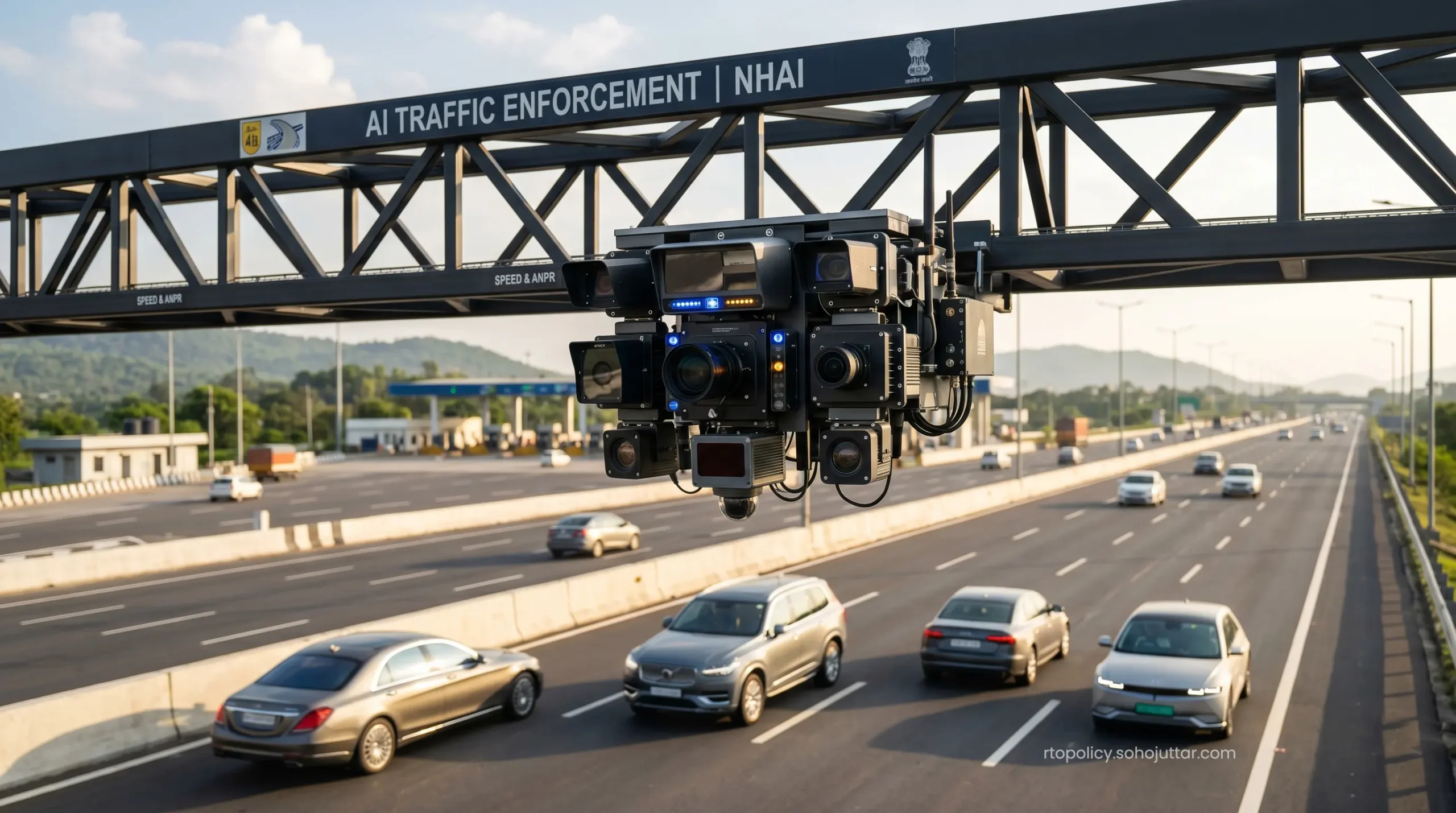
As your vehicle enters the camera’s field of view, the system captures multiple high-resolution images within milliseconds. The software isolates the license plate area, processes the alphanumeric characters, and cross-references the registration number with the central Vahan grid to verify active compliance data instantly.
Alongside ANPR camera setups, transport networks utilize automated speed-over-distance monitoring zones. These zones calculate your average speed between two separate camera points placed kilometers apart. If your calculated travel time proves that your speed crossed the legal limit, the server generates an electronic speeding citation automatically, completely eliminating human discretion from traffic enforcement.
These camera corridors run 24/7 without exception. A single long-distance journey across major states can accumulate multiple automated citations if your vehicle profiles contain unresolved compliance gaps. Maintaining regular checks on transport servers is the only way to avoid heavy compounding penalties.
The Crucial Link Between Citations and Your Motor Insurance Renewal
Many motorists treat an outstanding traffic fine as a minor civil matter that can be ignored indefinitely. This is a critical error that can cause significant financial leaks. Modern insurance underwriting firms have integrated their premium calculation scripts directly with the national Vahan database infrastructure via secure APIs.
When you request a motor insurance renewal quote, the underwriting system automatically reviews your central compliance history. A history of unresolved e-challans or active virtual court escalations flags your profile as high-risk, signaling reckless driving habits and systemic asset negligence to the underwriter.
To protect themselves against future own-damage claims or third-party liabilities, insurance company algorithms increase your base premium tier. This adjustment can hike your annual insurance costs by up to 30% and block access to premium add-on riders like zero-depreciation cover options, driving up your asset maintenance costs significantly.
Keeping your transport record entirely clear of automated fine entries is an essential requirement for affordable asset protection. To learn exactly how unresolved transport liabilities, such as an outstanding pay e-challan online citation, directly degrade your insurance coverage terms, read our guide on the fines and penalties for driving without valid insurance.
💎 Mizanur’s E-Challan Hack: Optimizing Digital Revenue Clearances
If you need to clear multiple high-value traffic fines, never use a generic savings account debit card. Log directly into the official portal and route your transaction through digital payment gateways that accept premium credit card offers. Select a premium credit card that classifies government revenue or utility payments under accelerated reward point structures. This routing allows you to claim up to 5% flat cashback or harvest thousands of air miles from a mandatory statutory penalty, turning a rigid traffic fine into a distinct optimization win for your personal wealth portfolio while clearing your record instantly.
The Cascading Legal Risk: From Administrative Fine to Virtual Court Summons
The updated Motor Vehicles Act enforces a strict 60-day legal window from the exact timestamp of infraction recording to complete resolution. This timeline is controlled entirely by automated server scripts, leaving zero room for human extensions or local administrative delays.
If the central transport ledger shows an unpaid status at midnight on day 60, the file undergoes an automatic escalation. The system locks the administrative fine entry and transfers the entire record directly to the digital virtual court database of the respective state jurisdiction.
Once a traffic ticket enters the judicial court ecosystem, standard transport payment screens are disabled for that vehicle chassis. The motorist must resolve the case via vcourts.gov.in under the oversight of a digital magistrate. At this stage, the fine amount often increases, and ignoring the digital summons can lead to bailable or non-bailable warrants sent to your local police desk.
An active judicial warrant places both your personal freedom and vehicle mobility under immediate threat. Patrol squads with plate scanning terminals can seize and impound your vehicle on the spot during a routine check, turning an overlooked fine into a major public and financial liability.
The Critical Threat of Vehicle Blacklisting on Vahan
When a traffic fine remains unresolved and enters the court tracking phase, the RTO compliance office immediately executes an administrative lock on your asset file. Your vehicle’s status on the central Vahan network is updated to a “Blacklisted Vehicle” flag.

This blacklisted status freezes your vehicle’s paperwork completely. You will be barred from processing an ownership transfer during a private sale, requesting a duplicate Registration Certificate, or obtaining a crucial No Objection Certificate (NOC) if you plan to move your premium vehicles across state borders.
Furthermore, if an ANPR camera network scans your plate and notices an active blacklisting flag, transport authorities hold full legal power to impound the vehicle immediately. Recovering a vehicle from an RTO impound lot involves heavy bureaucratic friction and substantial storage fees, making prompt fine resolution an absolute necessity.
Clearing these rigid administrative blocks requires complete legal resolution of every pending court case. For an in-depth analysis of how outstanding traffic citations escalate through the legal system and how to resolve them before they freeze your asset files, study our detailed guide on what happens if you don’t pay a traffic challan in India.
How Transport Infractions Hurt Your CIBIL Score and Financing Options
Modern banking institutions are shifting toward deep-background digital screening models. When you apply for premium credit card offers or competitive vehicle finance options, loan underwriting systems run deep checks that extend far beyond traditional credit history files.
An active history of unresolved traffic tickets and outstanding virtual court summonses signals behavioral instability and poor compliance care to credit underwriters. Risk management models link corporate compliance history with credit reliability, which can negatively impact your internal banking score.

This negative digital footprint can stall your financing applications instantly. Lenders will either reject your car loan request or impose highly inflated interest rates to offset the perceived risk to their collateral. Keeping your transport profile clean is essential to preserving your high-value credit opportunities.
Additionally, keeping your vehicle’s loan hypothecation data perfectly aligned with your registration documents prevents unexpected legal bottlenecks during future asset sales. You can master this administrative workflow completely by reviewing our comprehensive guide on the hypothecation addition and removal process.
The Danger of Point-Based Driver’s License Revocation
The centralized transport grid does not just monitor your physical vehicle; it tracks your personal operational record. Major Indian states are implementing point-based systems on the Sarathi database to penalize repeat traffic offenders.
Every time an electronic citation is generated for speeding, reckless driving, or lane violations, a specific number of penalty points are logged against your driving license. Accumulating more than twelve penalty points within a fixed window triggers an automatic suspension of your driving credentials by the RTO.
Operating an automotive asset under an active license suspension notice is a serious offense that can lead to heavy criminal fines and immediate jail time. Keeping your licensing credentials clear of administrative flags is paramount to maintaining your daily mobility. If your license faces any complex renewal bottlenecks, check out the formal restoration steps in our detailed online application guide for driving license services.
Commercial Fleet Management and Logistics Optimization
For fleet managers, logistics corporations, and commercial operators, tracking electronic citations is a critical business duty. Commercial vehicles are subjected to strict inspections at every state border crossing across India.
A single outstanding fine or an active blacklisted vehicle status on Vahan can cause border officials to detain an entire commercial chassis instantly. These detentions result in missed delivery windows, severe contractual penalties, and permanent damage to your corporate client relationships.
Successful logistics firms handle this risk by using automated software dashboards to scan the Parivahan database daily, resolving every electronic citation within hours to ensure their supply chains remain efficient, compliant, and highly profitable.
Verifying Post-Payment Digital Database Sync
A common error among motorists is assuming their compliance record is entirely clear the instant funds leave their bank account. Server synchronization delays between state judicial payment gateways and the national transport servers can occasionally leave your status marked as pending.
After completing an online e-challan payment, you must log back into the mParivahan mobile app after 72 hours to verify that the transaction status shows as “Paid” and the blacklisted flags are removed completely. This extra check guarantees your records show active compliance during unexpected roadside sweeps.
Taking this final step protects your asset documentation from database integration bugs, keeping your transport profile clean, professional, and fully audit-ready across all Indian states, shielding your personal capital from unexpected complications.
Final Blueprint for Long-Term Transport Compliance
Navigating the digitized transport networks of modern India requires constant vigilance and swift compliance planning. An unresolved electronic citation is a severe threat to your asset insurance standing, personal credit health, and legal driving privileges.
By auditing your vehicle registration files regularly on the Parivahan portal, clearing citations early via digital virtual court channels, and verifying your post-payment sync status, you build an ironclad shield around your capital.
Stay informed, respect traffic regulations completely, and treat RTO compliance as a core element of your personal wealth management strategy to keep your journeys across Indian roads smooth and highly secure.
Frequently Asked Questions (FAQ)
1. How can I check my pending traffic fines and e-challan status online?
You can check your active traffic compliance record by visiting echallan.parivahan.gov.in. Enter your unique vehicle registration number or license details alongside the last five digits of your chassis or engine number to access your infraction logs securely.
2. Can an unpaid traffic e-challan block my car insurance renewal?
Yes. Modern insurance underwriting firms utilize automated APIs to scan the Vahan database during renewal cycles. A history of unresolved traffic tickets will flag your profile as high-risk, driving up your base premium quote substantially.
3. How do I clear a vehicle registration profile that has been blacklisted on Vahan?
To clear a blacklisted vehicle flag, you must access the official virtual courts portal (vcourts.gov.in), resolve every outstanding traffic citation by paying the magistrate-directed penalties, and verify that your status updates to ‘Active’ on mParivahan after 72 hours.
