Quick Bites: Legal Penalties & Fines
- Allowing an e-challan to remain unresolved past the statutory 60-day limit triggers an automatic transfer of your transport file straight to a virtual court magistrate.
- The virtual court possesses full authority to issue a formal legal summons, which can escalate into a non-bailable warrant if completely ignored.
- On-ground traffic enforcement police squads hold the legal power to seize and impound your vehicle instantly if active warrants are flagged during a routine stop.
Quick Bites: Financial Hacks
- Outstanding transport citations act as significant compliance red flags, resulting in heavy premium spikes during your next comprehensive motor insurance renewal.
- Clear judicial liabilities early via integrated web portals that leverage premium credit card offers to convert necessary fines into accelerated reward miles.
- Unresolved legal cases can create an adverse public record entry that negatively influences loan approvals for high-value vehicle finance options.
Quick Bites: RTO Process & Fees
- The RTO immediately applies a restrictive ‘Blacklisted Vehicle’ flag to your registration profile on Vahan if traffic citations remain unpaid.
- This administrative block completely freezes your documentation privileges, rendering any interstate vehicle transfer or registration renewal impossible.
- Clearing the digital block requires paying all compounding court penalties and ensuring a clean manual sync with national transport databases.
The Digital Paper Trail: Why Delaying Traffic Fine Settlement is a Mistake
You are sorting through your corporate schedules, managing investments, and maintaining your vehicles when a text alert arrives on your mobile phone. It is an automated traffic ticket generated by a highway speed monitoring camera grid. Like many busy motorists, you might slide the notification out of view, assuming it can be cleared casually whenever you get around to it. This seemingly minor delay can trigger severe administrative and legal blockages across your entire personal asset portfolio.
The Ministry of Road Transport and Highways (MoRTH) has centralized its entire enforcement structure via the national Vahan database grid. An electronic citation is no longer just a localized traffic warning managed by a city police station. It functions as an active statutory lien against your digital identity, moving automatically through an escalating sequence of judicial penalties if left unaddressed.
Ignoring these automated notifications causes immediate friction across your personal financial lines. If a citation for a severe safety non-compliance, such as a recorded drink and drive fine in India, stays on your profile past the statutory grace period, software scripts freeze your files. This step blocks you from updating transport credentials or accessing preferred banking terms for high-value asset expansions.
Protecting your capital and ensuring uninterrupted road mobility requires managing your digital footprint with a proactive legal strategy. This comprehensive guide outlines the exact cascading legal consequences of an unpaid traffic challan, how the virtual court ecosystem operates, and how to protect your asset ratings from severe regulatory damage.
The 60-Day Countdown: From Administrative Slip to Judicial Case
Under current transport compliance directives enforced across all Indian states, a vehicle owner is granted a non-extendable 60-day window from the exact timestamp of infraction recording to complete resolution. This timeline is controlled strictly by server-side algorithms, eliminating human interference or field officer discretion completely.
If the central transport ledger shows a zero-payment status at midnight on day 60, the file undergoes a permanent transition. The system marks the administrative citation as a formal legal dispute and transfers the entire record directly to the digital virtual court database of the respective state jurisdiction.
Once a traffic fine enters the judicial court ecosystem, the standard transport payment interfaces are locked permanently for that specific chassis number. The motorist must now settle the matter under the oversight of a digital magistrate, where the legal stakes and potential penalties expand significantly beyond the original fine amount.
Failing to understand this hard transition window places your personal freedom and vehicle mobility under immediate statutory threat. To comprehend how these escalating enforcement protocols connect to your broader legal obligations and motor policy safeguards on modern expressways, look over our ultimate blueprint on RTO rules for motor insurance in India.
The Threat of Vehicle Blacklisting on the Vahan Portal
The first major structural penalty executed upon entering the court tracking phase is the immediate application of a restrictive administrative flag. The RTO compliance office modifies your vehicle asset file, changing its status to a “Blacklisted Vehicle” on the central Vahan network.
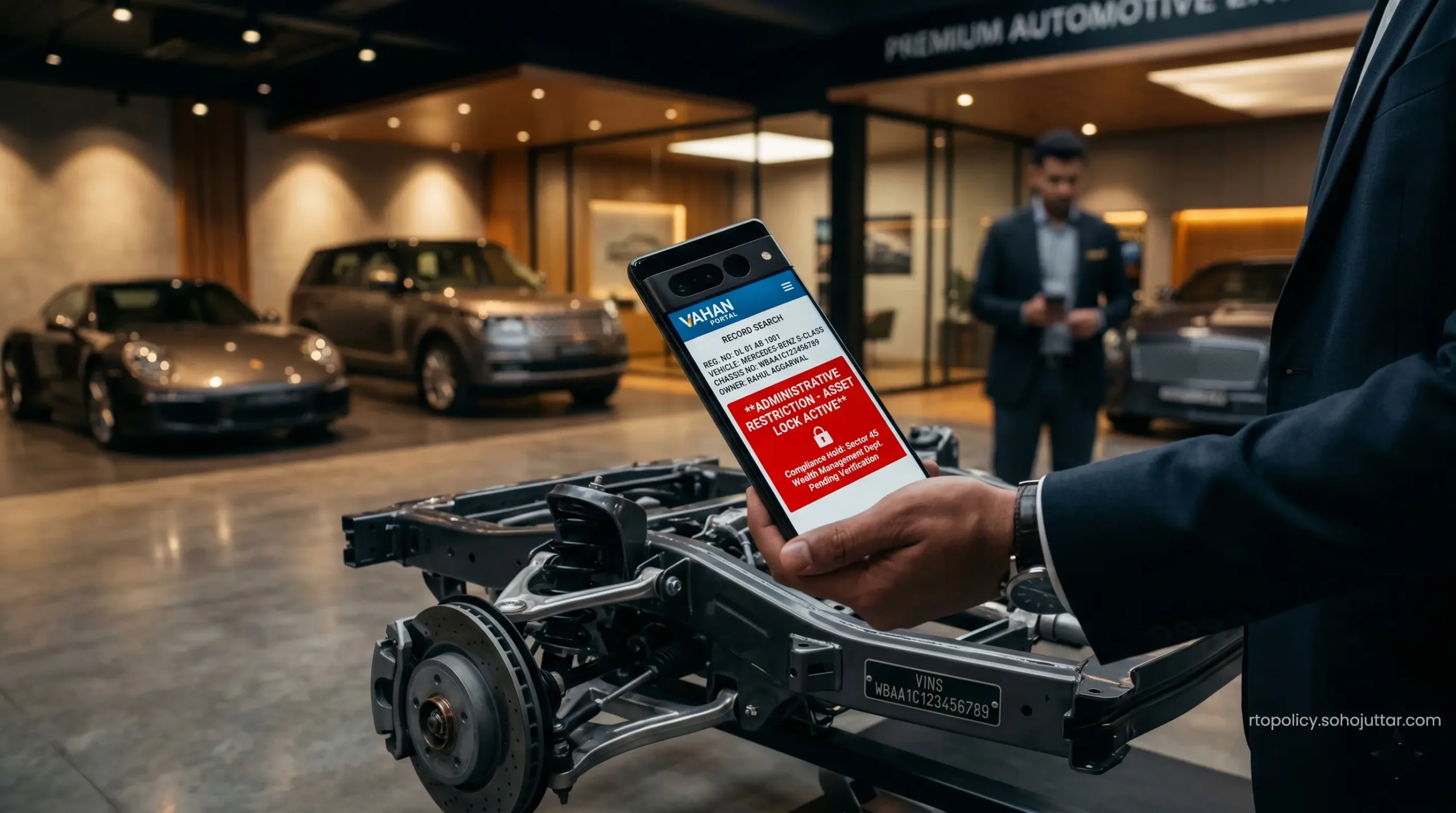
This blacklisted status freezes your vehicle’s documentation permissions completely. You will be barred from processing an ownership transfer during a private sale, requesting a duplicate Registration Certificate (RC), or obtaining a crucial No Objection Certificate (NOC) if you plan to move your premium vehicles across state borders.
Furthermore, on-ground patrol vehicles equipped with automated mobile license plate scanners check these data tags instantly. If the scanner detects an active blacklisting flag linked to outstanding judicial summonses, officers possess the full legal authority to impound the vehicle on the spot, creating heavy business interruptions and severe asset recovery expenses.
Clearing these rigid administrative blocks requires complete legal resolution of every pending court case. For an in-depth analysis of how automated citations are verified and resolved securely before they freeze your vehicle’s paperwork, study our step-by-step guide on how to pay a pending e-challan online seamlessly.
💎 Mizanur’s RTO Hack: Tracking the Legal Sync Window
If your transport profile is flagged for a virtual court summons, do not hire an expensive court lawyer immediately. Log directly into the centralized judicial interface at vcourts.gov.in and locate your case using your vehicle chassis number. If the record shows a ‘Plea Propose’ option, you can choose to plead guilty digitally and clear the fine instantly. When initiating payment, always route the transaction through digital gateways that accept premium credit card offers. Premium cards categorize court settlements under specialized revenue lines, allowing you to secure valuable cashbacks or accelerated loyalty points that turn a rigid legal fine into a distinct optimization win for your personal wealth portfolio.
The Judicial Escalation: Summons, Warrants, and Arrest Risks
Many vehicle owners treat a virtual court notice as a minor matter, assuming a traffic violation can never lead to serious criminal litigation. This assumption represents a critical misunderstanding of Indian judicial procedures. When a case lands on the digital magistrate’s bench, the court issues a formal legal summons to your registered mobile number and address.
A summons is a direct order from the judiciary commanding you to show cause for your traffic non-compliance. Ignoring this initial judicial order is treated as contempt of court. If the digital portal records a status of non-appearance past the specified hearing date, the magistrate possesses full statutory power to escalate the summons into a bailable warrant.
If the warrant remains unaddressed, it converts into a non-bailable warrant, which is dispatched straight to the local police desk in your residential area. At this advanced stage, you face the very real risk of physical detention by law enforcement authorities, turning a minor oversight into a severe public and personal liability.
Furthermore, an active judicial warrant means your vehicle is permanently flagged for immediate seizure across all automated police surveillance networks, making regular daily commuting a massive legal risk.
The Massive Premium Hikes During Motor Insurance Renewal
Modern insurance providers are changing how they assess risk metrics for Indian vehicle owners. During a standard motor insurance renewal cycle, programmatic underwriting engines run deep background checks against the central Vahan compliance history to calculate your behavioral premium bracket.
A transport profile cluttered with unpaid e-challans and active virtual court summonses signals extreme behavioral risk and severe asset negligence. To insulate themselves against future third-party liability claims or own-damage losses, insurers adjust your baseline risk factor upward aggressively.
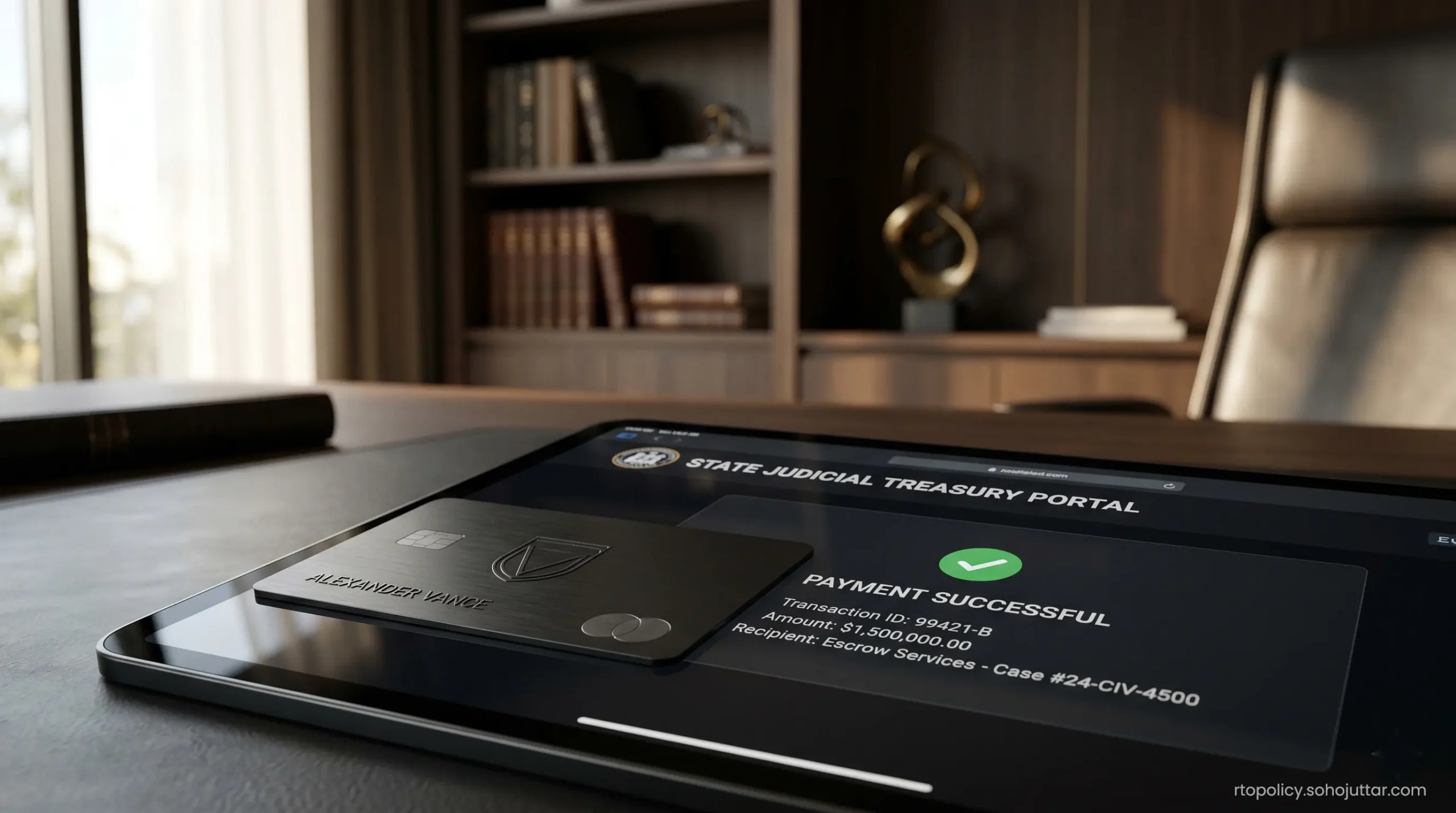
This adjustment results in an expensive premium increase. Insurers may raise your base premium quotes by up to 35% or, in many cases, refuse to provide premium add-ons like zero-depreciation cover riders entirely. By delaying the resolution of a simple ticket, you end up paying significantly higher insurance fees year after year.
Maintaining an unblemished, compliant driving profile is the absolute cornerstone of affordable asset protection. To learn exactly how safety infractions, such as a without helmet challan fine, directly degrade your insurance coverage terms, see our detailed guide on the fines and penalties for driving without valid insurance.
The Damage to Your CIBIL Score and Auto Loan Approvals
As India’s financial and transport networks become fully unified, credit underwriting systems are looking far beyond traditional bank loan histories. Overdue statutory liabilities and active court disputes create a permanent negative record on your civil identity profile.
If an unpaid traffic fine escalates into an active judicial warrant or an unresolved tax litigation dispute, deep background search scripts used by elite credit bureaus log the incident as an open public liability. This entry can drag down your CIBIL score tracking parameters over time.
A damaged credit profile severely compromises your purchasing power, delaying or blocking access to premium vehicle finance options or preferred lowest EMI loan terms for future automotive asset upgrades. Keeping your transport compliance spotless is a fundamental requirement for protecting your broader financial freedom.
How Unpaid Fines Block Commercial Fleet Operations
For fleet managers, logistics corporations, and operators of commercial chassis, unresolved traffic citations present an immediate threat to the corporate bottom line. Commercial vehicles are checked constantly at all major state border crossings across India.

The moment an interstate transport vehicle hits a border checkpoint, customs and transport authorities scan the registration plate against the Vahan server grid. If the database returns a status of blacklisted or shows open virtual court warrants, the vehicle is detained on the spot, blocking shipments and damaging your client relationships.
Successful logistics companies avoid these expensive delays by using dedicated automated scripts to run daily compliance checks on their fleets, resolving every electronic citation within hours to ensure their supply chains remain efficient and profitable.
Disputing an Erroneous Court Summons: The Correct Protocol
With automated AI camera corridors running automated enforcement across major metros, system tracking bugs and license plate misreadings are becoming increasingly common, causing innocent motorists to receive wrongful virtual court notices.
If you receive a court summons for an infraction you did not commit, do not ignore it out of frustration. Ignoring a judicial summons, even an erroneous one, allows the case to proceed against you automatically, leading to a default judgment and an active vehicle blacklisting flag.

The correct legal strategy is to enter the virtual court dashboard immediately and select the dispute track. File a formal objection notice backed by clear, verifiable photographic evidence showing that your vehicle’s physical chassis or plate design does not match the image logged by the enforcement camera network. The compliance desk will then review the file and dismiss the erroneous case manually, keeping your record pristine.
Verifying Post-Payment Digital Database Sync
A critical mistake made by many vehicle owners is assuming their transport file is entirely clear the moment a payment transaction is approved by their bank. Structural synchronization delays between state judicial servers and the central Vahan database can occasionally cause a cleared fine to show as pending.
After resolving an outstanding citation on the virtual courts portal, you must log back into the mParivahan mobile dashboard after 72 hours to confirm that the vehicle registration status has transitioned back to “Active” and the blacklisted vehicle flag is removed. This final step guarantees that field officers will find your record completely clean during random vehicle sweeps.
Taking this extra step ensures your vehicle records remain flawless, professional, and fully audit-ready across all Indian states, shielding your personal capital from unexpected administrative complications.
Final Blueprint for Long-Term Traffic Compliance
Navigating the digitized transport networks of modern India requires constant vigilance and swift compliance planning. An unpaid online e-challan is an active threat to your personal freedom, asset insurance standing, and credit profile longevity.
By auditing your vehicle registration files regularly on the Parivahan portal, resolving citations early via digital virtual court channels, and verifying your post-payment sync status, you build an ironclad shield around your capital.
Stay informed, respect traffic regulations completely, and treat RTO compliance as a core element of your personal wealth management strategy to keep your journeys across Indian roads smooth and highly secure.
Frequently Asked Questions (FAQ)
1. What happens if I ignore a traffic challan for more than 60 days?
If an e-challan is left unpaid for more than 60 days, the file is automatically transferred from the RTO system to a digital virtual court. The RTO will also place a ‘Blacklisted Vehicle’ flag on your Vahan profile, freezing all document updates and private vehicle sales.
2. Can an unpaid traffic challan lead to my arrest in India?
Yes. If you completely ignore the subsequent virtual court summons issued for an unpaid fine, the magistrate possesses full authority to escalate the case into a non-bailable warrant, which is forwarded to local law enforcement for physical execution.
3. How do I clear a ‘Blacklisted Vehicle’ status caused by outstanding fines?
To clear a blacklisted vehicle tag, you must log onto the virtual courts portal (vcourts.gov.in), resolve every pending traffic case by paying the magistrate-directed penalties, and verify that the status has synced and updated to ‘Active’ on the mParivahan app.
